
The right dining table in Malaysia comes down to three decisions: a size that leaves room to move, a top that survives our humidity, and a shape that suits your floor plan. A rectangular six-seater around 168 to 183 cm long fits most homes, sintered stone and good veneer handle tropical air with the least fuss, and round tables rescue tight corners while long rectangles anchor open-plan spaces. This guide walks through each choice so you can commit with confidence.
Buying a dining table Malaysia homes actually have room for means measuring your space first and matching the table to how you live, not to a showroom mock-up. Below you will find the standard sizes, the material trade-offs that matter in a humid climate, and the shapes that work in small versus open layouts.
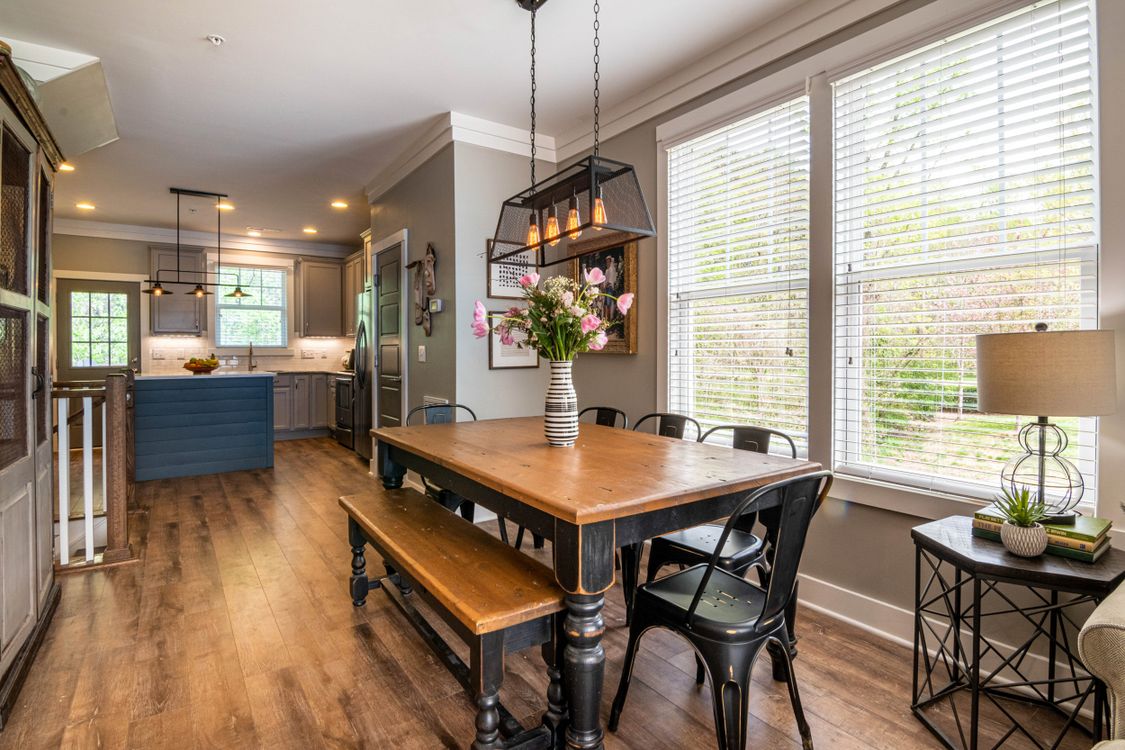
Standard dining table sizes for 4, 6 and 8 seaters
Table size starts with the person, not the room. As a working rule, each diner needs roughly 60 cm of table edge to eat comfortably, so seating capacity scales with length. The figures below reflect common furniture dimensions from independent sizing guides.
- 4-seater. Rectangular tables run about 122 to 152 cm long and 86 to 91 cm wide. Round versions sit between 91 and 122 cm across, and a square around 91 to 112 cm per side works well for daily meals.
- 6-seater. The everyday workhorse. Rectangles land around 168 to 183 cm long and 91 to 102 cm wide. A round table near 137 cm across seats six without eating up as much floor space.
- 8-seater. Rectangles stretch to roughly 213 to 244 cm long and 91 to 107 cm wide. Round versions need 152 to 183 cm of diameter, which asks for a genuinely large room.
Standard table height is a near-constant across these, usually about 71 to 76 cm, with 76 cm the most common.
Size does not stop at the tabletop. You also need clearance so chairs slide out and people can walk past without turning sideways. Design guides recommend leaving at least 91 cm between the table edge and the nearest wall or furniture, and 107 to 122 cm where someone walks behind seated diners. If you only have room for the tighter figure, a pull-out gap of about 76 cm is the practical minimum before dining gets awkward. You can see the full breakdown in this standard dining table dimensions guide.
A quick way to sanity-check any table: add clearance on all sides to the table footprint, then tape that outline on your floor. If you can pull a chair out and still pass behind it, the size fits.
Solid wood vs veneer vs stone tops
Once size is settled, the tabletop material decides how the table looks, how it ages, and how much care it needs in a humid climate.
Solid wood
Solid wood delivers the deepest character: continuous grain, real weight, and a surface you can sand and refinish for decades. The trade-off is movement. Wood constantly exchanges moisture with the surrounding air, expanding when humidity climbs and contracting when it drops. The USDA Forest Products Laboratory documents this behaviour in detail in its Wood Handbook, which explains why furniture wood is dried to a low moisture content before it is built. In Malaysia's climate that means a solid wood table is happiest in a cooled, drier room and less predictable in a space that swings from air-conditioned to fully open.
Veneer
Veneer is a thin layer of real wood bonded over an engineered core such as plywood or MDF. You keep the look and grain of wood on the surface while the stable core resists the seasonal movement that troubles solid slabs. A well-made veneer top gives you a calmer surface for humid rooms, and it often lets designers use striking grain patterns that would be wasteful or unstable in solid form. The limit is refinishing: the wood layer is shallow, so deep sanding is not an option.
Stone and sintered stone
Sintered stone and ceramic tops are non-porous, so they simply do not absorb moisture and do not react to humidity at all. They resist heat well enough to take a warm pot, shrug off most scratches, and hold their colour under sunlight. The look is contemporary and hard-edged rather than warm, and the material is heavy, but for low-maintenance dining in a tropical home it is hard to beat.
If your priority is a table that never flinches at humidity, stone leads. If you want warmth and are willing to manage the environment, solid wood rewards you. Veneer sits sensibly in between.
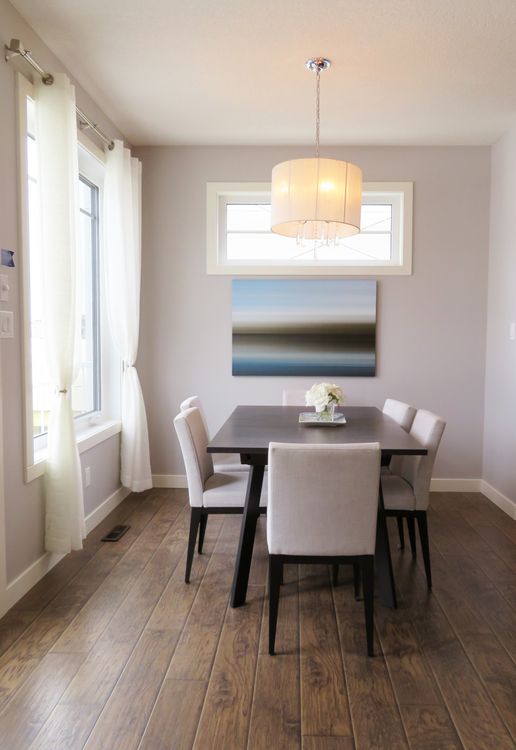
Shapes that fit small vs open-plan dining areas
Shape is where a table stops being a spec sheet and starts fitting your actual floor.
Small and enclosed rooms. Round and square tables win here. A round table has no corners to catch hips as you edge past, and it seats an extra person at a squeeze because there are no fixed place divisions. Square tables suit a nook or a table pushed against a wall for daily meals. For a compact condo, a round 4 to 6 seater keeps circulation easy.
Open-plan living and dining. Long rectangles come into their own. They define the dining zone within a larger space, line up naturally with a kitchen island or a run of windows, and scale to eight or more without dominating the room the way a giant round table would. An oval offers a softer version of the same idea, keeping the length while easing the corners.
The clearance rule from earlier still governs the choice. A beautiful eight-seater is the wrong table if it leaves under 91 cm to the wall. When in doubt, prioritise the walkway over the seat count. Detailed spacing recommendations, including per-seat width and pull-out room, are laid out in this dining table sizing calculator.
Care tips for tropical humidity
Malaysian air is humid for most of the year, which is the single biggest factor in how a dining table ages. Wood-based tops respond most, so the care routine centres on stabilising their environment and their surface.
- Keep indoor air steady. Wood moves when humidity swings. A room that is air-conditioned by day and thrown open at night forces the top to expand and contract repeatedly, which is what opens hairline gaps and stresses joints. Aim for consistency rather than perfection.
- Wipe spills immediately. Standing water is the fastest way to raise a ring or lift a finish. Use a barely damp cloth, then dry it.
- Use mats and coasters. Hot dishes and sweating glasses both punish a finish. Trivets and coasters are cheap insurance, especially on wood and veneer.
- Keep it out of direct sun. Constant sunlight through a window fades wood tone and can dry one edge faster than the rest, encouraging warping. Sheer curtains or a slight angle away from the glass help.
- Re-oil or re-wax on schedule. Oiled solid wood benefits from periodic feeding to keep the surface sealed. Follow the maker's guidance for the finish you have.
Stone and sintered tops sidestep most of this. A wipe with a soft cloth is usually enough, and they will not react to a humid week the way wood does. That low-maintenance quality is a large part of their appeal in this climate.
Nicchris contemporary dining table options
Nicchris designs dining tables for Malaysian homes and Malaysian weather, which shows up in the choices offered. The range spans warm solid wood pieces for buyers who want natural grain and are set up to keep their rooms comfortable, alongside stable veneer and stone-topped tables built for lower-maintenance living in humid conditions. Shapes cover compact rounds for condos and long rectangles for open-plan spaces, so you can match the table to your floor plan rather than compromise on it.
Because the pieces are modern and contemporary in style, they slot into open living areas and minimalist interiors without fighting the rest of the room. If you have measured your space and know your seat count, browsing the Nicchris dining collection is a practical next step to see which size and top suit your home.
Start by taping out your table footprint plus clearance on the floor tonight. Once you know the largest table that still leaves a clear walkway, choose the top that matches how much upkeep you want, then shortlist two or three tables in that exact size. That order, space first, material second, style last, is how you end up with a dining table you are glad you bought.