Good home decor ideas for brown furniture start with one simple move: surround the wood with lighter, warmer accents so the richness reads as cozy instead of heavy. Brown is one of the most forgiving base tones in a home, which means you can style it in dozens of directions without replacing a single piece.
This guide walks through why brown furniture keeps coming back, which palettes flatter warm wood, how to layer textiles and greenery, and the small mistakes that make a brown room feel dated. Each section gives you something you can try this weekend.
Why Brown Furniture Is Timeless
The best home decor ideas for brown furniture lean on one fact: brown furniture stays relevant because it borrows its colors from nature, and natural tones rarely feel wrong in a home. Walnut, oak, teak and leather all carry warmth that reads as settled and welcoming, the kind of backdrop that suits a reading chair as easily as a dining table.
The trend data backs this up. Benjamin Moore named Silhouette AF-655, a rich espresso brown, as its Color of the Year 2026, the brand's first brown selection since the initiative began in 1999, according to its official announcement. After years of cool greys and stark whites dominating interiors, warm browns are back at the center of the conversation.
There is also a practical reason brown endures. It hides wear better than pale finishes, it ages gracefully, and it works across styles from mid-century to rustic to contemporary. A good brown piece is a long-term investment rather than a trend you replace in three years.
Palettes That Complement Warm Wood Tones
The quickest way to make brown furniture look intentional is to build a palette around it. Warm wood has yellow, red or orange undertones, so the colors that flatter it either echo that warmth or offer a clean, calm contrast.
A few combinations that consistently work:
- Soft white and cream. Warm whites keep the room bright and let the wood grain stand out. Avoid stark, blue-based whites, which can make brown look muddy next to them.
- Sage and olive green. Green is the natural partner to brown, since the two sit side by side in the outdoors. Muted greens feel current without shouting.
- Terracotta and rust. These earthy tones share the red undertones in many woods and leathers, so they blend into a layered, collected look.
- Muted blue and grey-blue. For a cooler contrast, dusty blues calm down a brown-heavy room and keep it from feeling too warm or closed in.
- Warm grey and taupe. A neutral bridge that softens the transition between dark wood and lighter walls.
If you are starting a room from scratch, the color decisions carry over to the larger pieces too. Our guide to living room furniture ideas for Malaysian homes covers how to balance a warm palette against the bright, humid light common in local interiors.
A simple rule: choose one dominant neutral for the walls, let the brown furniture be the anchor, and add just two accent colors. More than that and the room starts to feel busy.
Layering Textiles and Greenery
Textiles are where a brown room goes from flat to inviting. Because wood and leather are hard, smooth surfaces, the space needs soft layers to balance them, and variety in texture matters more than variety in color.
Start with a rug that lifts the furniture off the floor visually. A pale wool, jute or patterned rug breaks up large expanses of wood and defines the seating area. Then build up with cushions and throws in different weaves: a chunky knit against a smooth linen, a boucle cushion beside a flat-woven one. The contrast in texture catches light and adds depth even when everything stays within a tight color range.
Curtains do quiet, heavy lifting. Floor-length panels in a warm neutral soften hard window lines and make ceilings feel taller, which keeps a room with dark furniture from feeling boxed in.
Greenery is the other half of the equation, and the payoff is more than visual. A 2010 University of Technology Sydney study found that introducing just one plant per workspace produced a 37% fall in reported tension and anxiety and a 58% drop in depression or dejection, as summarized here. The lesson for a home is simple: plants do not only style a shelf, they genuinely change how a space feels to be in. Against brown furniture, the living green of a fiddle-leaf fig, a trailing pothos or a cluster of smaller pots reads especially vivid, since green and brown are natural companions.
Mix plant heights to keep the arrangement from looking staged: one tall floor plant, a mid-height plant on a side table, and something trailing from a shelf.
Avoiding a Heavy, Dated Look
The most common reason a brown room feels dated is matching. A matched wood set, same tone, same finish, same era, is what makes a space look like a showroom from decades ago. The fix is contrast on every level.
Here is what keeps brown feeling current:
- Mix wood tones. Pair a darker walnut table with lighter oak chairs, or set a mid-brown sofa against a deeper wood cabinet. Varying tones reads as collected, not catalog.
- Break up wood with other materials. Introduce metal legs, a glass tabletop, rattan, ceramic or upholstered pieces so the eye gets a rest between wood surfaces.
- Let light move. Keep walls lighter than the furniture, add a mirror to bounce daylight, and choose lamps that wash warm light across the room in the evening. Dark furniture in a dark, under-lit room is what feels heavy.
- Edit the surfaces. Clear, styled surfaces with a few considered objects look modern. Cluttered dark wood looks tired.
- Add one lighter anchor. A pale rug, cream sofa or white-painted shelf gives the eye a bright landing spot and stops the brown from closing in.
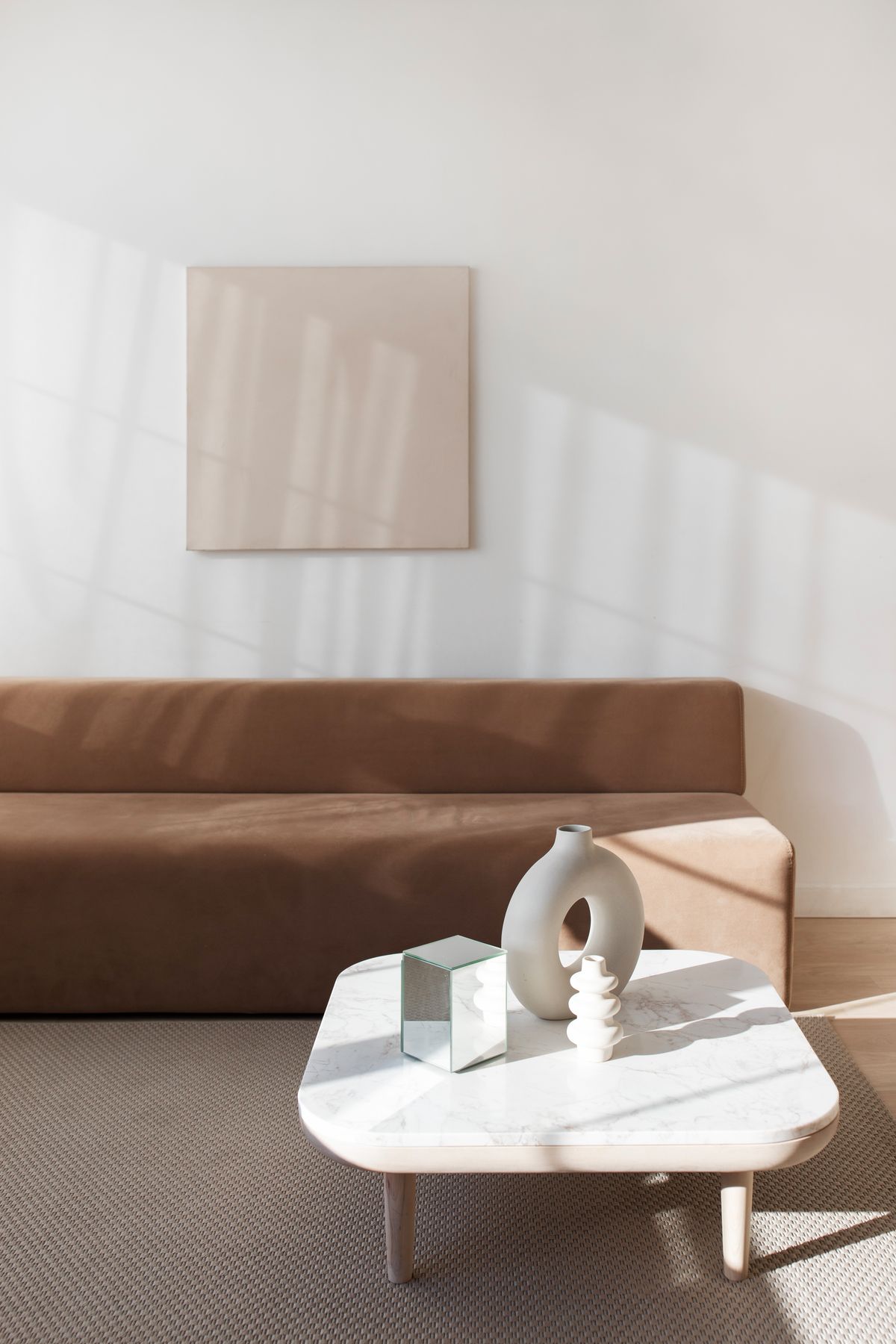
Scale matters too. In smaller or darker rooms, choose brown pieces with raised legs rather than solid bases sitting flush to the floor. The sliver of visible floor underneath makes furniture feel lighter and the room feel larger.
Nicchris Pieces in Warm Brown Finishes
Nicchris designs modern sofas, dining tables and chairs that lean into warm wood and earthy upholstery, which makes them a natural starting point for a brown-forward room. Because the pieces are built around clean, contemporary lines, they carry the warmth of brown without the bulk that dates older furniture.
A warm-toned sofa works best as the room's anchor, with lighter textiles layered on top. When you are weighing options, think about sizing, materials and proportions first, so the piece fits both your space and your palette before you commit to a color.
For dining, a solid wood table in a mid-to-deep brown pairs beautifully with chairs in a slightly different tone or an upholstered seat, exactly the kind of deliberate mix that keeps wood from looking matchy. The point is to let each Nicchris piece relate to the others without repeating them.
Brown furniture rewards a slow, layered approach. Pick your anchor piece first, build a warm palette around it with one or two accents, then add texture and greenery until the room feels lived-in. Start this week by choosing a single accent color and swapping in a few cushions and a plant, then see how differently the wood reads before you change anything larger.